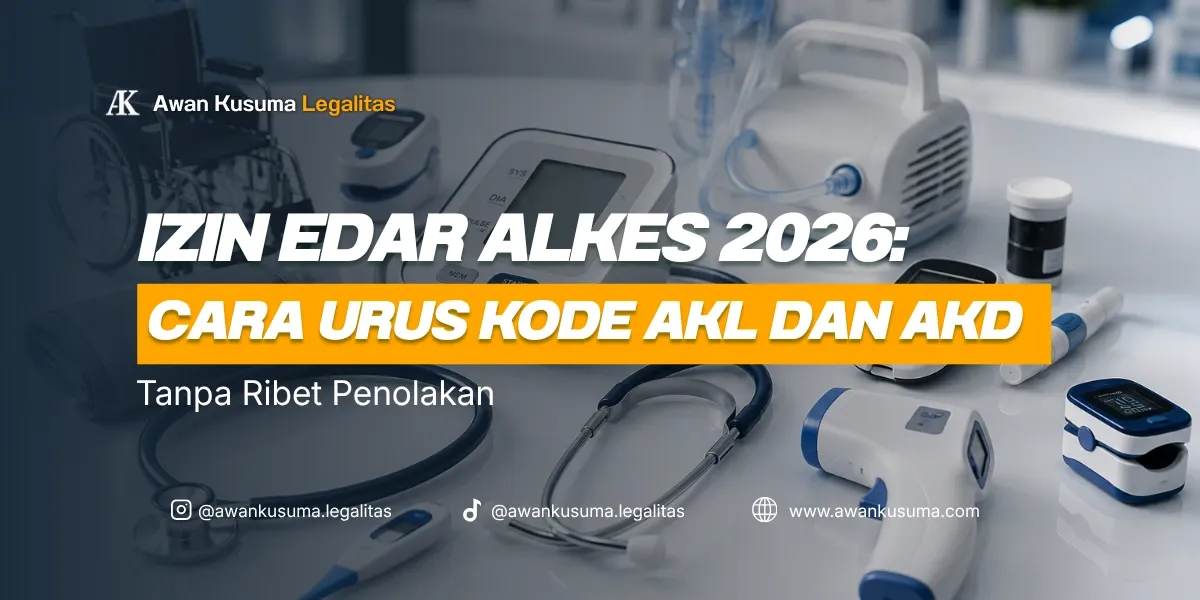
For entrepreneurs operating in the medical supply industry, modern clinic owners, and large-scale distributors, 2026 is the year of proof. The medical device market in Indonesia is surging sharply, but field oversight is much stricter than in previous years. Many novice business owners, and even experienced distributors, get trapped in legal problems due to one simple carelessness: distributing medical devices without an official Marketing Authorization Number (NIE) or misclassifying their product codes.
Selling medical devices without marketing authorization is no longer just an administrative violation that ends with a written warning. The real risks include confiscation of goods in warehouses, closure of clinical operations, and even criminal penalties.
If you want to secure your multi-billion rupiah investment in medical device commodities, understanding the e-report bureaucracy and Ministry of Health (Kemenkes) registration is a mandatory step.
AKD vs. AKL: Understanding the Two Sacred Marketing Authorization Codes for Medical Devices
Before you move to the document uploading stage, you must determine which "room" your medical device product belongs to. The government divides medical device marketing authorization into two main categories based on the origin of production:
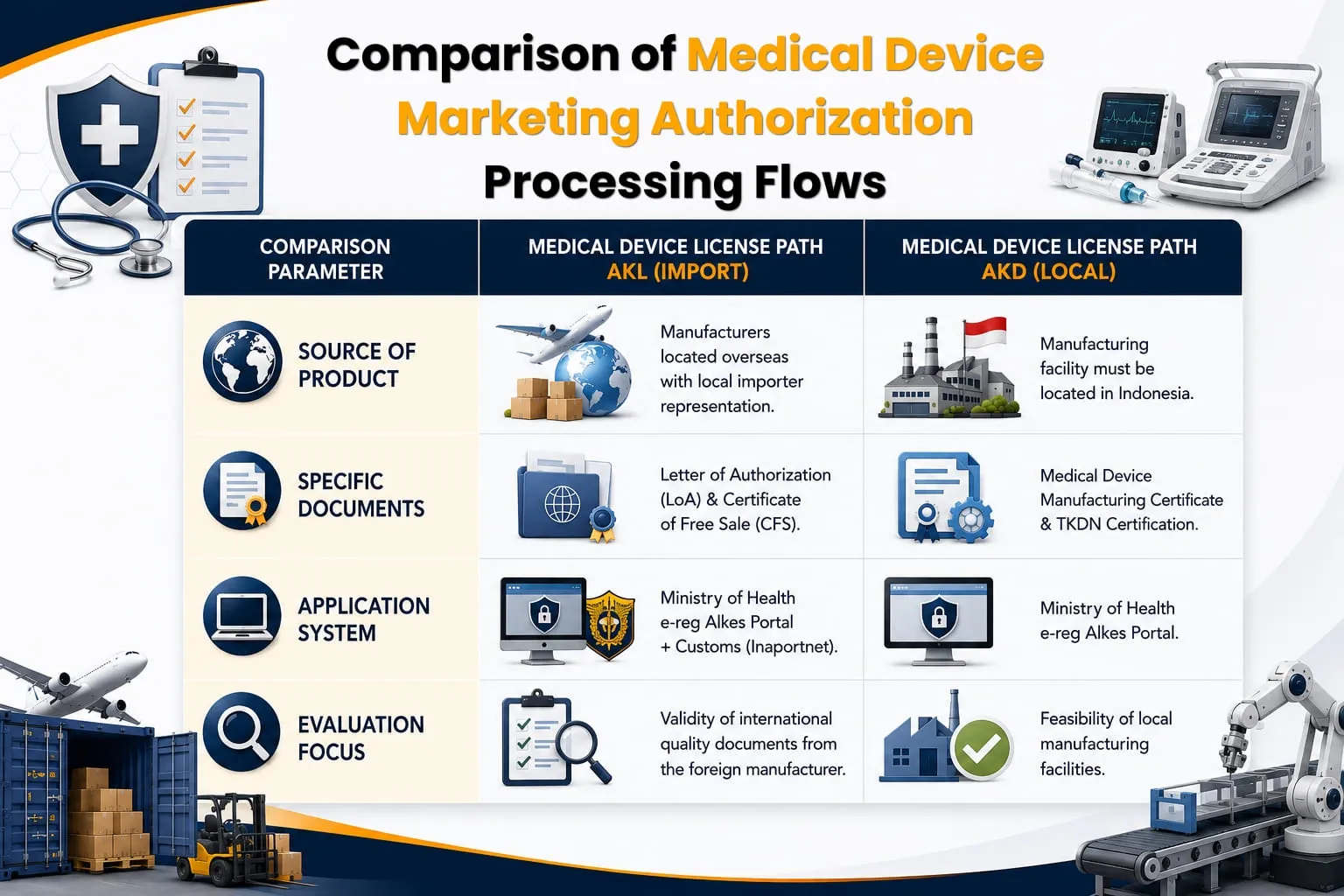
AKL (Imported Medical Devices)
The AKL code is intended for medical devices produced by manufacturers abroad and then brought into Indonesia by authorized local distributors or importers. Based on market demand data, AKL processing requires very high attention. The process requires meticulous international documents such as a Letter of Authorization (LoA) from the originating factory, a Free Sale Certificate, and compliance with international quality standards (ISO 13485).
AKD (Domestic Medical Devices)
The AKD code is issued specifically for medical devices produced by domestic or local industries. The government is currently actively promoting the Program for Increasing the Use of Domestic Products (P3DN). If your product falls under the AKD category and has a high TKDN (Domestic Component Level) certificate, you will receive preferential treatment (a "red carpet") in the government procurement system (e-Catalog).
Medical Device Risk Classes: Determining How Fast Your Permit Is Issued
The Ministry of Health does not treat the review process for a cotton mask the same as an MRI Scan machine. All types of AKD and AKL are divided into 4 main risk classes that determine how strictly your documents will be audited:
- Class A (Low Risk): Devices that do not pose significant risk to patients if malfunction occurs. Examples: Cotton, bandages, surgical masks, manual wheelchairs. The verification process is relatively faster.
- Class B (Low to Medium Risk): Devices with mild systemic impact. Examples: Syringes, surgical gloves, digital thermometers.
- Class C (Medium to High Risk): Devices that require strict supervision in their use. Examples: Hemodialysis machines, ventilators, X-Ray machines.
- Class D (High Risk): Medical devices that are implanted in the body or directly sustain human life. Examples: Heart stents, pacemakers, orthopedic implants. Processing this class requires layered clinical trials.
Mandatory Document Checklist Before Entering the E-Reg Medical Device System
The entire registration process is conducted digitally through the Ministry of Health's e-reg medical device portal. Before your company account is registered, ensure you have the following basic legal foundations:
- NIB and Company NPWP: Ensure that the KBLI code on your NIB already covers wholesale trading or medical device distribution activities.
- Facility Permit (IDAK/SDAK): You cannot apply for product marketing authorization if you do not have a Medical Device Distribution Permit (IDAK) or Medical Device Distribution Certificate (SDAK) for importers, or a Production Permit for local manufacturers.
- Product Technical Documents (Executive Summary): Original brochures, technical specifications, workflow diagrams, laboratory test results, and quality assurance certificates from the originating factory.
Comparison of Medical Device Marketing Authorization Processing Flows
Don't let this series of systems make you step back. Here is the logical roadmap of how your marketing authorization is processed by the ministry:
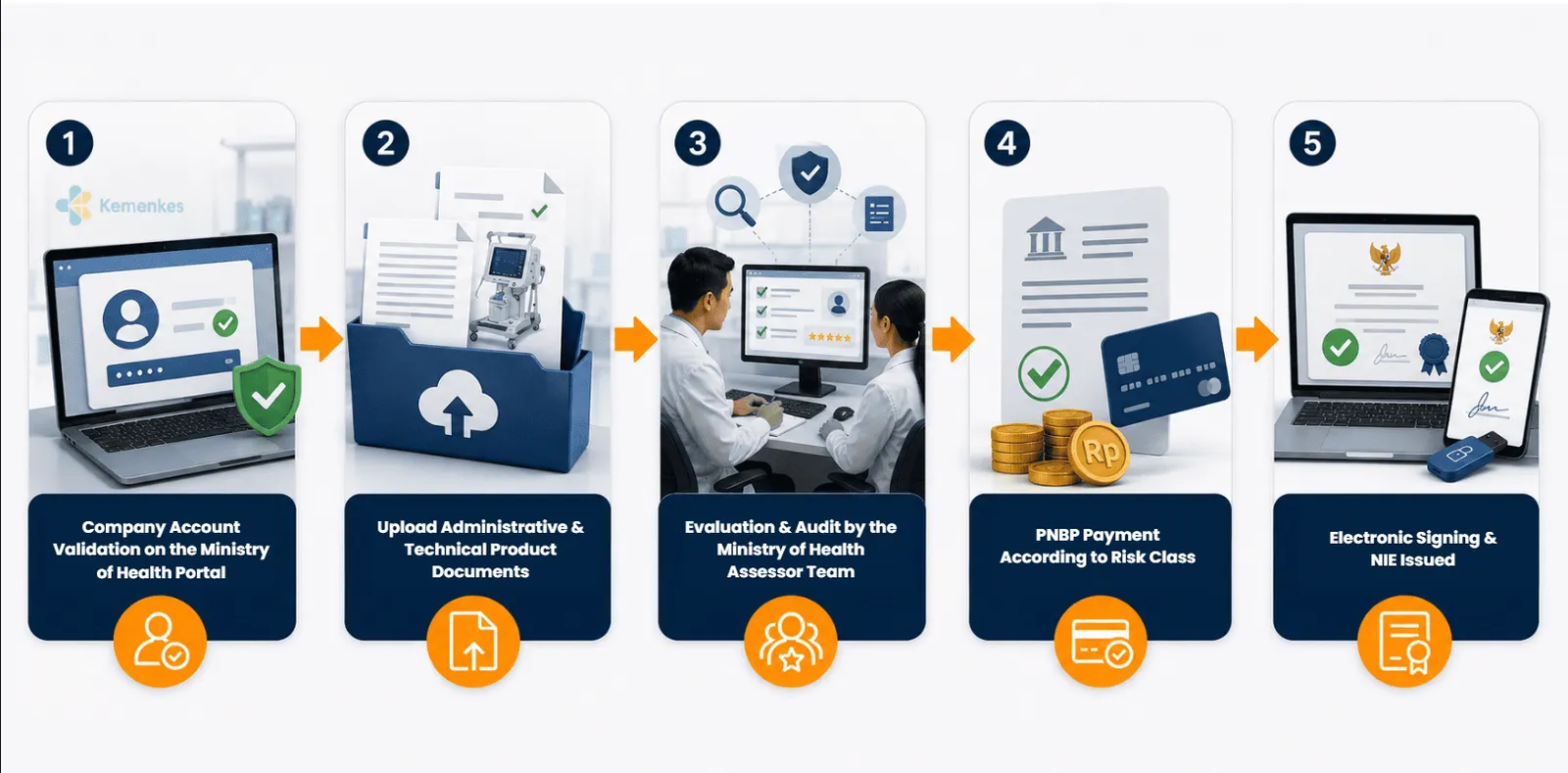
[Company Account Validation on Ministry of Health Portal] ➔ [Upload Administrative & Technical Product Documents] ➔ [Evaluation & Audit by Ministry of Health Assessor Team] ➔ [PNBP Payment According to Risk Class] ➔ [Electronic Signing & NIE Issued]
- Pre-Registration: The stage of locking the company account by matching NIB data from the OSS system to the Ministry of Health database.
- Technical Evaluation: This is the crucial phase where the Ministry of Health expert team examines the safety, quality, and efficacy aspects of the medical device you are registering. This is the stage where revisions most often occur if brochure data does not align with the product's medical claims.
- NIE Issuance: After the evaluation passes and the PNBP (Non-Tax State Revenue) fee is settled, the electronic Marketing Authorization Number will be issued and immediately active in both the customs system and e-Catalog.
For clinic owners or distributors chasing supply contract deadlines, facing potential document revisions in the Ministry of Health system can take months. Utilizing professional medical device marketing authorization management services from Awan Kusuma is the most tactical investment decision to secure your business timeline.
FAQ: Critical Questions About Medical Device Marketing Authorization in the Field
Does AKD or AKL marketing authorization have a validity period?
Yes. Medical device marketing authorization is valid for a maximum of 5 (five) years, or adjusted to the validity period of supporting documents such as the LoA from the originating factory. You are required to apply for renewal before the validity period expires so that the product is not blocked in the market.
Can one importer company register the same medical device from a foreign factory if it has already been registered by another importer?
In general, the Ministry of Health adheres to a single agent system based on an exclusive Letter of Authorization (LoA). If the originating factory grants distribution rights to multiple distributors without an exclusivity clause, the registration process requires a joint distribution agreement document to avoid trade disputes later on.
What about marketing authorization for home care products such as standalone digital blood pressure monitors?
Home self-care products are still categorized as medical devices (usually falling into Risk Class A or B). The requirement to have marketing authorization remains absolute before the product is marketed in pharmacies or general marketplaces.
Secure Your Medical Device Market Share with Awan Kusuma
In a high-value industry like medical devices, the speed of launching products to market is the determining factor for success. Don't let golden opportunities for clinic contracts or hospital tenders slip away just because your marketing authorization documents are stalled in the system review queue.
Entrust your medical device legal management to our specialist legal consultants. Contact Us via WhatsApp now for an initial document audit and free regulatory consultation!