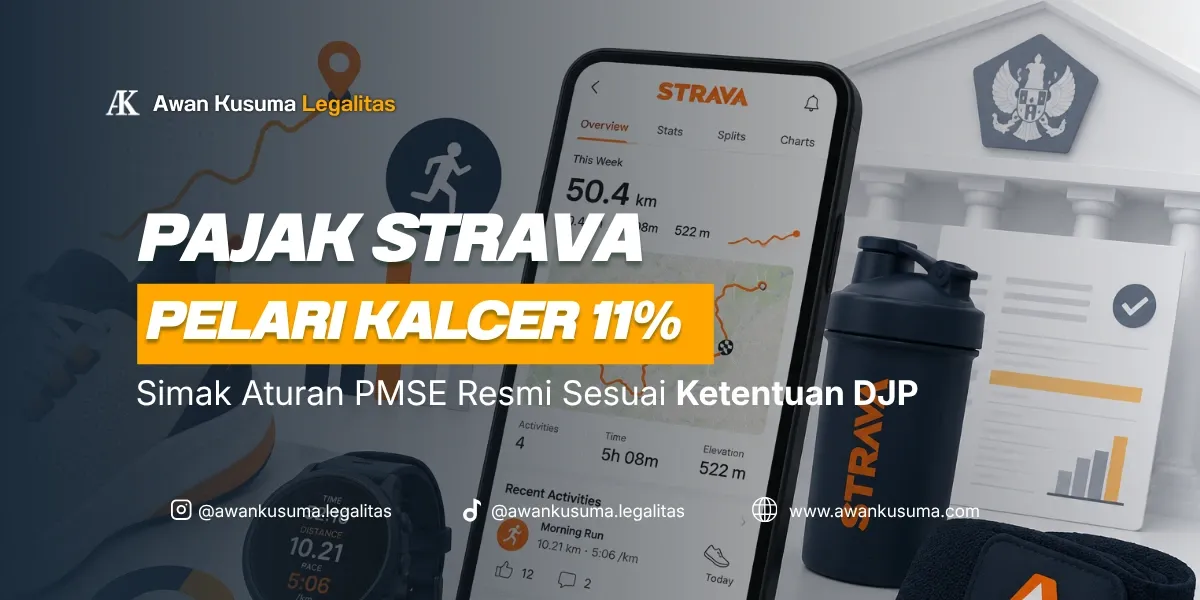
The phenomenon of "trendy runners" (pelari kalcer) now not only dominates the streets of big cities with their aesthetic outfits and cutting-edge running shoes, but has also become a hot topic in the realm of tax law. Social media was recently stirred by a ripple of information claiming that running activities would be subject to an 11% tax by the state. This issue regarding the "Strava tax" spread wildly, sparking debates and giving birth to the incorrect assumption that every drop of sweat on the track now comes with a fee component.
So, what is actually happening?
The core of the issue is not the physical activity of the running community, but rather the digital transactions carried out within the application. The government, through the appointment of foreign platforms as collectors of Tax on Electronic System Trading (PMSE), applies a Value Added Tax (VAT) of 11% specifically for users of paid services (Strava Premium).
Interestingly, if we look at this policy from a business law perspective, this DJP move is not just an ordinary tax collection. It is a major step to create a level playing field for local application developers in Indonesia.
Official DJP Clarification: Separating Sweat from Digital Transactions
To prevent widespread misinformation in the community, the DJP has provided a very clear boundary regarding the tax object in question:
- Running is Tax-Free: The government has never and will never impose taxes on independent sports activities carried out by the public.
- Focus on Premium Features: The object subject to the 11% VAT is purely paid digital service subscription transactions, specifically for users who choose to upgrade to premium accounts to enjoy more in-depth data analysis features.
- Free Accounts Unaffected: For runners who remain loyal to using the free version just to track their weekly distance and routes, there will be no bills or deductions whatsoever.
Strava's management itself has stated that they are not changing the company's base subscription price. The increase in monthly fees is purely due to the addition of 11% VAT required by Indonesian legal regulations. As an illustration, if your monthly subscription fee is IDR 50,000, after adding 11% VAT, the amount deducted from your credit card or digital wallet becomes IDR 55,500.
The Fairness Side: A Fresh Breeze for the Domestic Application Industry
For years, foreign technology corporations could easily sell digital products in the form of applications to the Indonesian market without being tied to tax burdens equivalent to local business actors. This certainly created unhealthy competitive imbalances. Creative domestic entrepreneurs who have been law-abiding from the start are already burdened with value-added tax, while foreign applications roam free enjoying net profit margins from millions of users in Indonesia.
The appointment of global applications as PMSE collectors by the DJP is concrete evidence that the state is starting to tighten comprehensive supervision of the digital ecosystem. This policy ensures that every foreign business entity profiting from the Indonesian people must comply with the same tax law corridors as local entrepreneurs.
For creative industry players, startup founders, and domestic health application owners, this momentum is a strong signal that our digital market is being organized towards a fairer direction. If your application business scale starts to grow and you frequently conduct mass commercial transactions with domestic users, it is time for your company to be officially confirmed into the state tax system. Processing your PKP (Taxable Entrepreneur) status will be proof of your business legality credibility and also the gateway to establish official digital procurement cooperation with large corporate institutions.
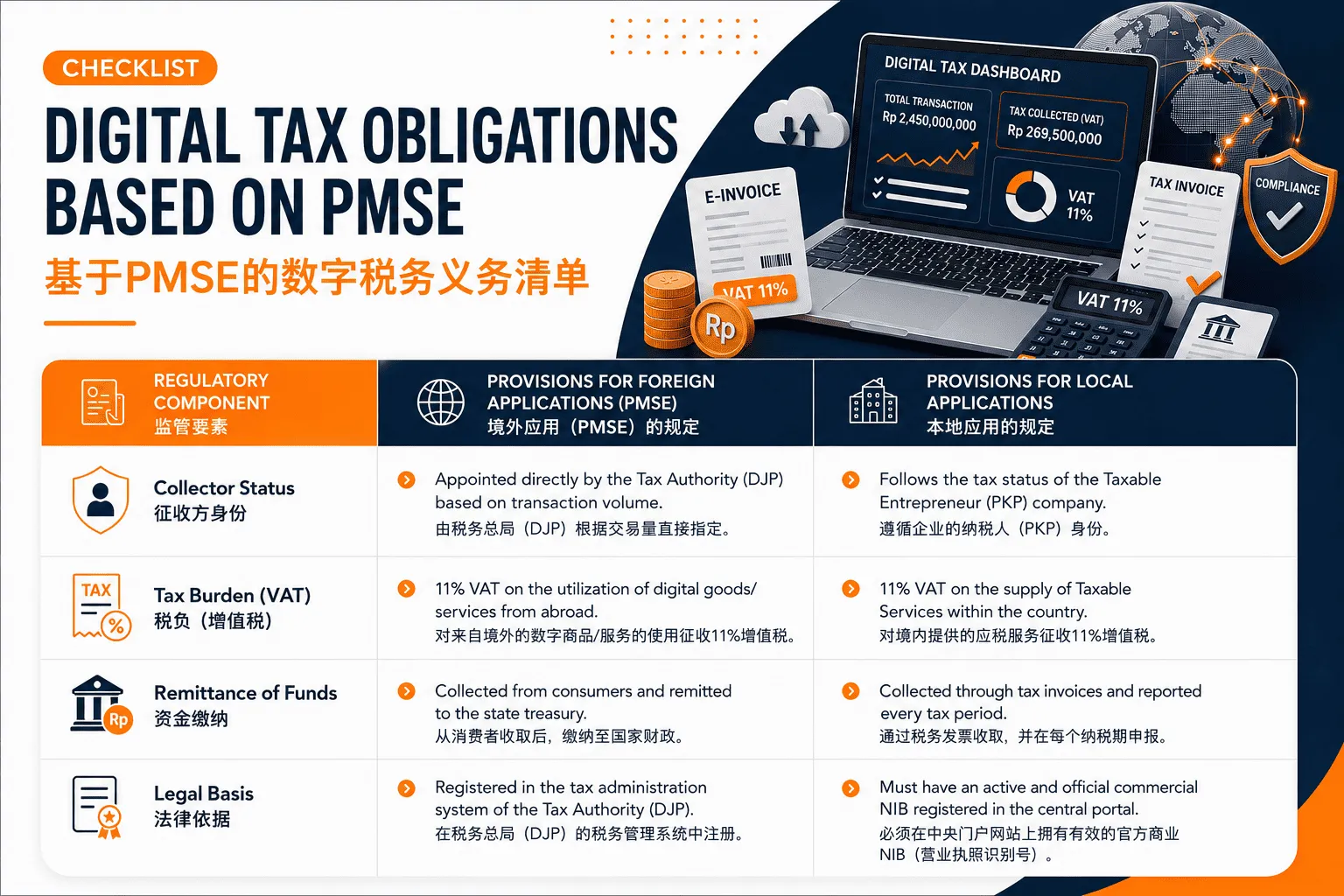
PMSE-Based Digital Tax Obligations Checklist
For digital business actors whose business scale is starting to grow to meet the criteria for digital tax collectors, here is a summary of the compliance flow that must be understood:
Intellectual Property Protection in Digital Competition
The government's firmness in regulating foreign application taxes through the PMSE scheme proves that Indonesia's digital ecosystem is now increasingly mature and of high value. When foreign platforms start following domestic rules of the game, competition will shift purely to feature quality, algorithms, and the originality of the technology products you offer.
In the midst of this tight competition, the greatest asset of a technology company is not physical capital, but ideas, programming code, and visual identity. Therefore, for local health application developers or sports platforms, securing business identity from the start is a step that cannot be delayed. This protective step can be taken through official brand certification processing, so that your application name, unique logo, and all intellectual property rights to your digital products are fully legally protected from competitor plagiarism.
FAQ: Questions About VAT on Digital Services
Does this 11% VAT only apply to sports tracking applications?
No. Every foreign digital platform with massive transaction value in Indonesia has been gradually appointed by the DJP as a PMSE VAT collector.
How do I know that my subscription fee has been deducted for VAT?
Every time you receive a digital invoice or monthly payment deduction proof from the application, the 11% VAT component must be transparently listed as proof that your funds have been deducted to be deposited into the Indonesian state treasury.
Does the annual corporate tax return (SPT) processing include reporting digital transactions like this?
Yes, for local companies acting as users of foreign digital services for business operations, the VAT withholding proof must be recorded and reported periodically. If you need assistance in organizing state bookkeeping documents, you can use Annual SPT processing services to ensure your corporate tax compliance is safe without penalty differences.
Secure Your Digital Business Legal Compliance with Awan Kusuma
The presence of digital tax regulations such as the PMSE scheme proves that the government is fully committed to creating a healthy competitive climate for domestic business actors. Don't let your digital business growth potential be hindered merely by negligence in legality governance and legal administration at the early stages of establishment.
Prepare your business legality and technology business legal compliance structure with our specialist legal consultant team now. Contact Us via WhatsApp to get a free consultation session and the best licensing solutions!